


The knees play a critical role in providing stability, strength, and range of motion needed for standing and walking. When a knee injury occurs, even simple movements can become difficult. Many people experience serious mobility challenges and may struggle with everyday transitions, such as moving between standing, sitting, and lying down.
In accidents, knee injuries often result from powerful forces applied to the legs. These forces may include direct impacts, as well as twisting or stretching motions that damage the structures within the knee. Beyond the physical pain, knee injuries frequently require extensive medical treatment, reduce overall quality of life, and may limit a person’s ability to work and earn income.
Knee Anatomy
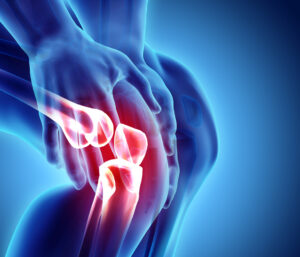
The knee joint connects the three leg bones of the upper and lower leg.
Four primary ligaments act as the “strong ropes” that hold the bones together and provide stability to the joint.
In a traumatic accident, these are frequently stretched or torn (ruptured):
- Anterior Cruciate Ligament (ACL): Located in the center of the knee, it controls rotation and the forward movement of the tibia. It is the most common ligament to be injured in sudden “stop-and-twist” motions.
- Posterior Cruciate Ligament (PCL): Connecting the back of the tibia to the inner side of the femur, it prevents the tibia from sliding too far backward. It is often injured by a direct impact to the front of the knee, such as a “dashboard injury” in a car accident.
- Medial Collateral Ligament (MCL): Runs along the inside of the knee and prevents the joint from buckling inward.
- Lateral Collateral Ligament (LCL): Runs along the outside of the knee and connects the femur to the fibula, preventing the joint from buckling outward.
Finally, the kneecap, called the patella, is held over the knee by the patellar ligament. The patella protects the joint.
Causes of Knee Injuries
Knee injuries most often occur as a result of trauma. In many cases, this trauma places sudden or excessive stress on the knee joint and its surrounding structures.
The types of trauma that commonly lead to knee injuries generally fall into the following four categories:
- Blunt Trauma: A blunt blow to the knee can damage soft tissues. It can also dislocate or fracture the bones.
- Penetrating Trauma: An object that penetrates the knee can lacerate the ligaments. Even if it does not damage the knee ligaments, the object can cause bleeding and create an infection.
- Hyperextension: Hyperextension is a common cause of knee injuries, particularly in sports. Hyperextension happens when the tissues are stretched unnaturally, damaging them.
- Repetitive Stress: Another common cause of knee injuries is overuse. Repetitive stress causes small tears and cracks to form in the knee structures. This damage propagates, worsening the injury.
Understanding how knee injuries occur is an important step in identifying liability and building a strong personal injury claim after an accident.
Types of Knee Injuries
Knee trauma can lead to several different types of injuries, each affecting the joint’s bones, ligaments, cartilage, or surrounding soft tissues in different ways.
Some of the most common are:
Knee Sprain
Knee sprains happen when the leg is pulled, twisted, or bent unnaturally. For example, a slip and fall accident could result in a knee sprain as you shift your leg to try to catch yourself, wrenching your knee in the process.
Symptoms of a knee sprain include the following:
- Pain
- Inflammation
- Limited range of motion
- Knee instability
Minor sprains may heal with home care, including ice packs and over-the-counter anti-inflammatory medication. Severe sprains will often require surgical repair.
Torn Cartilage
The knee contains two distinct types of cartilage. Articular cartilage coats the ends of the bones to allow smooth gliding, while the meniscus consists of two C-shaped wedges that act as shock absorbers between the femur and tibia.
Torn cartilage can result from wear. It can also happen when knee trauma causes the joint to suddenly twist or bend. For example, a car accident could tear knee cartilage when you are suddenly hit, causing your body and legs to whip around.
Minor tears may heal with rest, while major tears may require arthroscopic surgery to remove the pieces of cartilage floating inside the joint.
Fractured Patella
A blunt force to the front of the knee can shatter the patella. A fractured patella will often produce a visibly disfigured knee. Doctors will confirm the diagnosis with an X-ray image. Treatment may involve reconstructing the patella using screws and plates. In other cases, doctors may simply remove the bone fragments, leaving the patient without a patella.
Symptoms of a Knee Injury
The symptoms of a knee injury can vary depending on the severity and the structures affected. In many cases, the signs appear immediately after an accident, while other symptoms may develop gradually over the following hours or days.
Common symptoms of a knee injury include:
- Persistent knee pain
- Swelling or inflammation around the joint
- Stiffness or reduced range of motion
- Instability or a feeling that the knee may “give out”
- Difficulty walking or bearing weight on the injured leg
- Popping or grinding sensations in the knee
If you experience any of these symptoms after an accident, it is important to seek medical attention. Prompt diagnosis and treatment can help prevent further damage and support your recovery.
Contact a Dallas Personal Injury Lawyer at Benton Accident & Injury Lawyers for a Free Consultation
Knee injuries can vary depending on which part of the joint is damaged, but they are often painful and may significantly affect your mobility and daily life. If your knee injury was caused by someone else’s negligence, you may be entitled to compensation for your medical expenses, lost income, and other damages.
Contact Benton Accident & Injury Lawyers today at (214) 556-8321 to speak with an experienced Dallas personal injury lawyer and schedule your free consultation. Our team is ready to review your case, answer your questions, and help you pursue the compensation you deserve.
